


In a surprising turn of events, Kenya has emerged as the global frontrunner in ChatGPT usage. A staggering 42.1% of Kenyans aged 16 and above are actively using the AI chatbot, dwarfing adoption rates in tech giants like the United States and China. This isn’t just a story of tech adoption; it’s a testament to a significant mindset shift occurring within the East African nation.
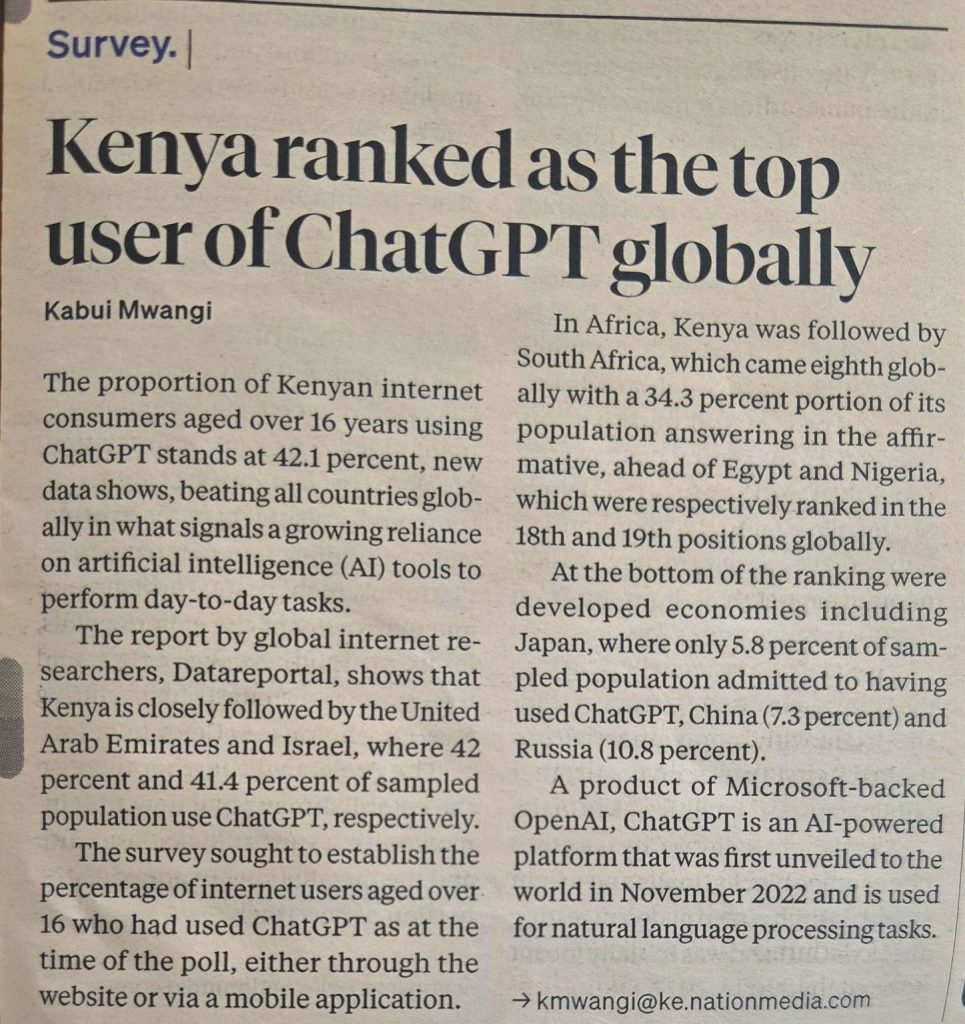
While headlines often focus on Silicon Valley’s innovations or China’s technological prowess, the data paints a different picture. Studies consistently show Kenya leading the charge in ChatGPT engagement. This begs the question: what factors have contributed to this remarkable phenomenon?
Kenya’s high mobile penetration rate fueled by smartphones bought on loan and paid on daily basis like M-Kopa, has created a fertile ground for digital adoption. The country boasts a young, tech-savvy population eager to explore new technologies. Furthermore, a strong entrepreneurial spirit fuels the desire to leverage AI tools for innovation and problem-solving. Finally, ChatGPT’s readily available access to information appeals to the Kenyan people’s thirst for knowledge.
Kenya’s embrace of ChatGPT transcends mere technological curiosity. It reflects a fundamental shift in how Kenyans approach problem-solving, information gathering, and creativity. People are not just using ChatGPT; they are integrating it into their daily lives, from education and business to entertainment and social interaction.
For example, students use ChatGPT to research and understand complex topics, entrepreneurs use it to generate business plans and marketing materials, and creative individuals use it to brainstorm ideas and explore new artistic avenues. This widespread integration demonstrates a proactive and adaptive mindset and explains why even the political battle has changed from physical advocation to online advocation and mobilization.

While Kenya’s ChatGPT adoption is commendable, it’s important to acknowledge the challenges that come with it. Issues such as data privacy, misinformation, and job displacement need to be addressed proactively. However, the opportunities presented by this technological leap are immense. With responsible development and implementation, AI can empower Kenyans to drive economic growth, improve access to education and healthcare, and address some of the country’s most pressing challenges.
Kenya’s experience can serve as a valuable model for other developing nations seeking to harness the power of AI for societal good. The +254-area code is quickly becoming synonymous with innovation and technological leadership on the global stage.
