

When Mwai Kibaki came to Kisumu in 2002 with the NAK and LDP luminaries, he nostalgically spoke about Elijah Omolo Agar as one of the foremost sons of the Luo community and a fellow economist that he met and worked with in KANU the pre-independence period and in the early years of independence. Omolo Agar is the grandfather of PS for Interior and Internal Security Dr. Raymond Omollo and FCPA Hesbon Omollo, an ICPAK Council member and a Director at the KEMSA.
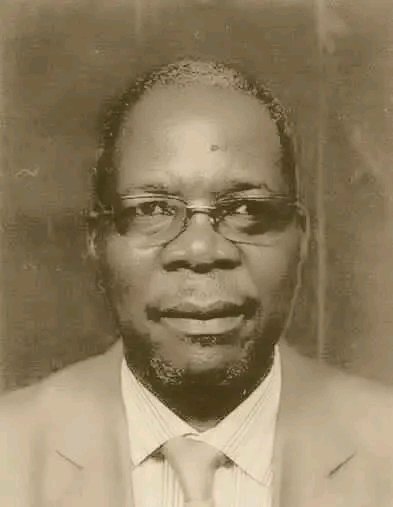
After spending his early education in both Kenya and Uganda, Omolo Agar later won a scholarship from the Government of India that enabled him to proceed Wilson College Bombay where he studied economics, graduating with BA (Econ). It is reported that he also studied Political Science and earned a master’s degree from Pittsburgh University in the US.
While studying in India, Omolo Agar was a leading radical figure in the anti-Colonial African Nationalists Organizations in India. He was also a key figure in the African Students Association and the African Liberation Committee. Together with other leaders of the organizations, Omolo Agar radicalized African students using political theories to justify racial pride amongst the Africans and armed struggle against colonialists. They mobilized and organized African students in India to establish, on their return to the continent, a revolutionary cadre that to lead subversion against the colonists.
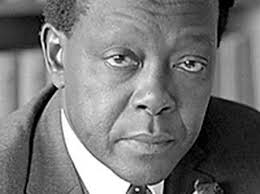
Omolo Agar is credited, while still in India, for publishing “Resurgent Africa” and “African Youth”, publications that evoked anti-British emotions and were distributed underground, despite being officially banned in Kenya and other colonies in Africa.
When Omolo Agar arrived in back in Kenya, docking at Mombasa Port on 19th June 1958, he carried with him a copy of the Constitution of India. Knowing that the colonial police would confiscate it, on stepping out of the ship, he gave a copy of the publication to one of the dock workers with the express instructions that the same should be delivered to Tom Mboya.
He immediately immersed himself into political activity in Mombasa. A day after his arrival, he is reported to have addressed an Executive Committee meeting of the Mombasa African Democratic Union. It is said that, in his lecture to the group, he introduced them to new and superior methods of political organizing, calling for a nationalist political party in Kenya.
Tom Mboya immediately drafted Omolo Agar into the Nairobi People’s Convention Party (NPCP), a Nairobi based political party that the former had formed in 1957, inspired by Kwame Nkrumah’s Convention People’s Party (CPP) in Ghana. Jaramogi Oginga Odinga’s initial attempt, through D.O. Makasembo to draw Omolo Agar to his corner failed, with Omolo Agar opting to work with Tom Mboya. Jaramogi never forgave him for this.
Omolo Agar was henceforth Mboya’s lieutenant in the new party which played a crucial role in the fight for Kenya’s independence. Despite attempts at suppression from the colonial government, Omolo Agar’s political organization skills combined with Mboya’s intellectual and oratory skills enabled the NPCP to effectively mobilize Africans in Nairobi to further the nationalist cause and fight for independence from Britain, especially when the other nationalist had been detained in Kapenguria and Mau Mau violently crashed. On the recommendation of Mboya and by reason of a declaration of incapacity in respect of himself, Omolo Agar was appointed by the Colonial Governor P.M. Renison through Kenya Gazette Notice No. 531 of 1958 to be temporarily, with effect from the 21st day of January 1962, a Member of the Kenya Legislative Council.
NPCP was described as a political machine due to its effective growth strategy and organisation. Tom Mboya relied on the skills of Omolo Agar to ensure that the party was grass-rooted throughout Nairobi and beyond and that it was multi-ethnic and multi-sectoral, taking advantage of Mboya’s inroads into the trade union movement to reach every corner.
Omolo Agar became the Organising Secretary and editor in chief of NPCP’s mouthpiece “Uhuru” that both of them used to spread pro-independence propaganda and to radicalize Africans throughout Nairobi and beyond. “Uhuru” propagated anti-colonial propaganda and promoted racial confrontation on a scale hitherto never witnessed in Kenya.
As the Organizing Secretary of NPCP, Omolo Agar mobilized and organized a disciplined carder to form a youth brigade for the party. This group held parades and adorned NPCP party uniform in defiance of a colonial law which prohibited distinctive dressing at public events. The group activated the politics of Nairobi, spreading the message and influence of NPCP to every neighborhood of the city. NPCP competitors were literally bludgeoned out of Nairobi. It is this control of Nairobi politics by NPCP that led Jaramogi to insist that the meeting where KANU was to be launched as a nationalist political party be held in Kiambu and not Nairobi, fearing being overrun by the NPCP forces.
It is no wonder that Omolo Agar was the first person to be picked when the Colonial police launched operation “pied piper” in March 1959 before raiding Tom Mboya’s house. It is his article questioning the detention of the Kapenguria Six that triggered the operation.
On his arrest on 5th March 1959, the police led him to NPCP party offices and his village home where a search for subversive literature was conducted, unearthing a trove of subversive documents proving that while in India, he made an extensive study of organizations and methods of underground militant movements and the strategy of secret warfare.
The police found in his possession detailed notes on methods of sabotaging ships, railway rolling stock, motor vehicles and on the manufacture and use of weapons such as “Molotov Cocktails”. In his handwritten notes, police found that he had laid out an elaborate plan for an armed popular revolution in Kenya. The notes also indicated that he was actively mobilizing external assistance for the envisaged struggle, including men trained to wield modern weapons, and to commit acts of sabotage, and the training of Kenya Africans abroad in matters of technical, revolutionary and military.
Found in his note books was his handwritten opinion that “a nation fighting for its liberty from colonial rule, ought not to adhere rigidly to the accepted rules of warfare”. He also scribbled “that an essential preliminary to the successful prosecution of a struggle for independence is the unity of the masses, their indoctrination and the forging of a powerful, militant political organisation. In order to curtail his revolutionary influence, the Colonial Government detained Omolo Agar and sent to the harsh Manyani prison where he served term with John Keen and was later released.
On Jomo Kenyatta’s release from detention in 1961, Omolo Agar is reported to have played a key role in calling for and organizing the merger of NCPA with the Kenya African Union (KAU) and Kenya Independence Movement (KIM) to form the Kenya African National Union (KANU). This merger, Omolo Agar argued, was necessary in order to present a national unified front at the Lancaster House Conference in the form of the Kenya African National Union (KANU). The Indian Constitution that he had brought with him back into the country formed the basis of Mboya’s mobilization and organization of his colleagues on the constitutional issues to be fronted in Lancaster.
In the first Independence election, Omolo Agar vied for the Member of Parliament for Karachuonyo Constituency. He beat Jaramogi Oginga Odinga’s ally Gogo Ochok in the party primaries for the Kenya African National Union (KANU). Oginga Odinga however ensured that the ticket went to the losing Gogo Ochok. Omolo Agar, in his revolutionary spirit, opted to via on as an independent candidate and won the elections with a landslide to become the first Member of Parliament for Karachuonyo Constituency.
Omolo Agar got involved in a near fatal accident at Ruga in Oyugis on his way from Kisii. These injuries eventually led to his demise in 1970 shortly after the assassination of Tom Mboya in July 1969.
Despite his death, the revolutionary spirit of Omolo Agar lives on. His influence in Mboya’s legacy lives on to date. His love for education inspired many to go to school, ensuring that Got Komolo village where he came from teems with PhDs and other levels of education in various fields.
Documented by: Luo Nation Historical and documentaries. Facebook page.
