

Trump’s Bid to Restore World Peace: A Turning Point in Global Diplomacy
In a world weary of conflict and division, Donald Trump’s recent diplomatic maneuvers have reignited discussions about the possibility of lasting global peace. His latest announcement—declaring an end to the Gaza war before landing in Tel Aviv—has sent shockwaves through international circles. For decades, the Israel-Palestine conflict has symbolized one of the most intractable struggles on Earth. If Trump’s claim holds true, it could mark a historic turning point not only for the Middle East but for global stability.
A Breakthrough in Gaza
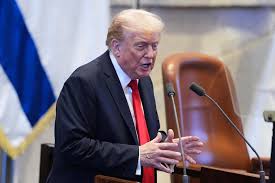
The release of seven Israeli hostages by Hamas earlier today has offered a rare glimmer of hope in a region long defined by despair. Reports suggest that behind the scenes, Trump’s team has been working tirelessly to broker a deal that would see Hamas demilitarize and allow Gaza to rebuild under civilian technocrats. Such a move could pave the way for reconstruction, governance reform, and a new era of coexistence between Israelis and Palestinians.
If the missiles truly fall silent and the children of Gaza can once again play without fear, it would represent one of the most significant humanitarian achievements in modern history. Trump’s approach—combining pressure, negotiation, and unconventional diplomacy—appears to have yielded results where traditional methods have failed.
Beyond the Middle East
Trump’s efforts are not limited to the Israeli-Palestinian conflict. His administration has reportedly been engaging with global powers to de-escalate tensions in Eastern Europe and the Indo-Pacific. By leveraging economic influence and direct dialogue, Trump aims to reduce military confrontations and encourage nations to prioritize trade, development, and cooperation over warfare.
In regions like Ukraine and Taiwan, where geopolitical rivalries threaten to spiral into broader conflicts, Trump’s strategy emphasizes pragmatic engagement over ideological confrontation. His message is clear: peace through strength, negotiation, and mutual respect.
A Controversial but Effective Approach
Critics often accuse Trump of being brash and unpredictable, yet his unorthodox style has occasionally produced unexpected breakthroughs. His previous meetings with North Korean leader Kim Jong-un, though controversial, opened channels of communication that had been frozen for decades. Now, his renewed focus on the Middle East suggests a broader ambition—to position the United States once again as a global peace broker.
If Trump succeeds in securing a lasting peace between Israel and Palestine, it would not only redefine his legacy but also reshape the global order. The Nobel Peace Prize, often reserved for those who achieve the seemingly impossible, could become a realistic prospect.
A World Watching in Hope
For now, the world waits in cautious optimism. The sight of freed hostages returning home and the sound of silence over Gaza offer a fragile but powerful symbol of what could be achieved through determined diplomacy. Whether this moment marks the dawn of a new era or a temporary lull remains to be seen.
But one thing is certain: if Donald Trump can turn ceasefires into peace, and peace into prosperity, he will have done what few leaders before him have managed—restored faith in the possibility of world peace.
