

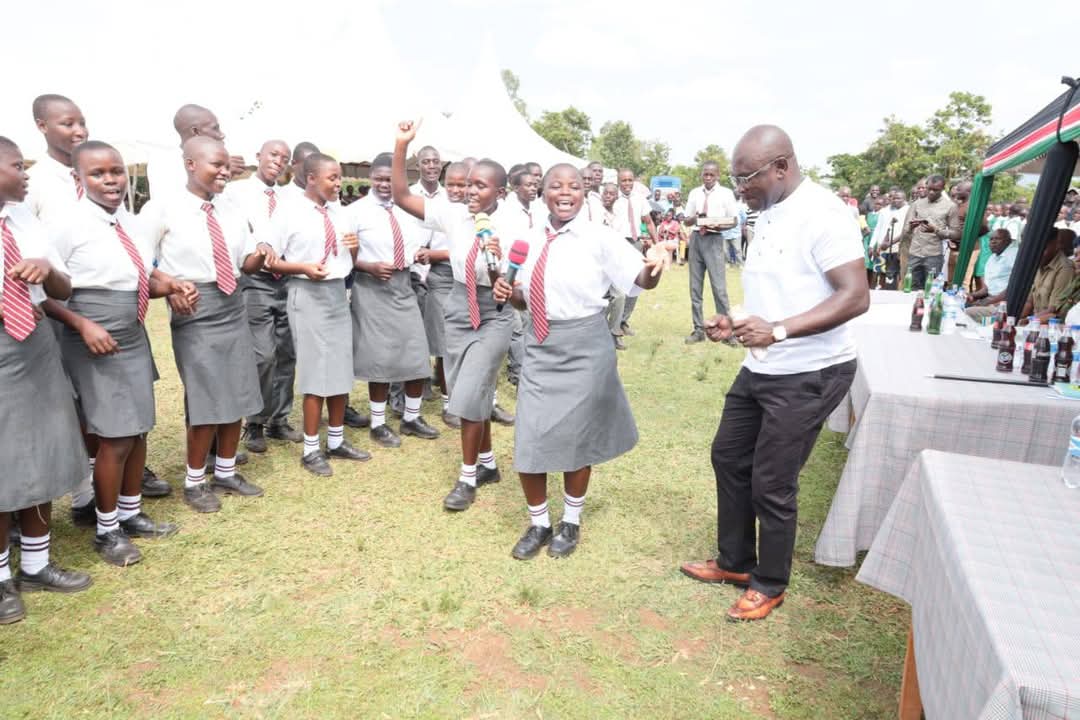
The current system of issuing bursaries, while seemingly helpful, often falls short of addressing the deeper, systemic issues within our educational system. After watching the weekend activities by Members of parliament who spent the weekend taking photos and videos with few of their constituents something they politically used to massage their ego and make the electorates look desperate and weak to an extent of kneeling for them thanking them for nothing I still hold an argument that bursaries are discriminatory in practice and are frequently used for political gain rather than genuine support ultimately failing to provide the equitable educational opportunities that all citizens/voters deserve. A more sustainable and just solution lies in making public secondary education free for all something my Member of Parliament David Ouma Ochieng will spend millions opposing for the reason best known by him.

The Problem with Bursaries
Bursaries, while intended to help, often create more problems than they solve.
Discriminatory Practices: Bursary allocation can be subjective and prone to biases, consciously or unconsciously disadvantaging certain groups based on factors other than genuine need those who make several trips to Ugenya’s CDF office in Sega will tell you that office has made more illiterate millionaires than solving the vulnerable needs.
Political Mileage: Politicians often use bursary disbursements as photo opportunities, exploiting vulnerable students and families for public relations. This reduces the purpose of education assistance to political capital. If today we remove bursaries from the Mps I can bet less than 50% will have a reason to be re-elected and this has killed the legislative role of these elected Mps who does nothing as far as their main role is concerned.
Limited Impact: Bursaries typically cover only a fraction of the actual costs associated with education, such as uniforms, books, transport, and other essential supplies. Thus, the impact of bursaries on educational outcomes is often limited.

The Case for Free Public Secondary Education.
A more equitable and sustainable solution is to eliminate school fees at public secondary schools for the following reasons:
Leveling the Playing Field: Free education ensures that all students, regardless of their socioeconomic background, have equal access to quality education.
Eliminating Discrimination: Removing the financial barrier eliminates a key source of potential bias and discrimination in access to education.
Focusing on Quality: With universal access ensured, resources and efforts can be directed toward improving the quality of education and providing comprehensive support to all students.
The Role of MPs: Legislation for Change
Instead of allocating bursaries, Members of Parliament should focus on enacting legislation that:
Abolishes school fees at all public secondary schools.
Ensures adequate funding for public schools to maintain quality education.
Establishes mechanisms to address the underlying issues of poverty and inequality that hinder educational attainment.
It is therefore my belief that bursaries, while intended to alleviate financial burden, often serve as a temporary and inequitable solution to systemic problems. By shifting the focus toward providing free public secondary education for all, and by creating appropriate and effective legislation, we can ensure a more just and equitable educational system that benefits all citizens, not just a select few. Just to ask why would a government give students money inform of bursaries to pay in the government run schools?
Leo Nyabaya
Educator| Moderator| Generational Thinker
